Apricot Desktop Document Tray For Everyday Papers And Working Drafts
Apricot Desktop Document Tray For Everyday Papers And Working Drafts
Couldn't load pickup availability

Apricot Desktop Document Tray For Everyday Papers And Working Drafts
Not filed away. Not spread everywhere. 🍑
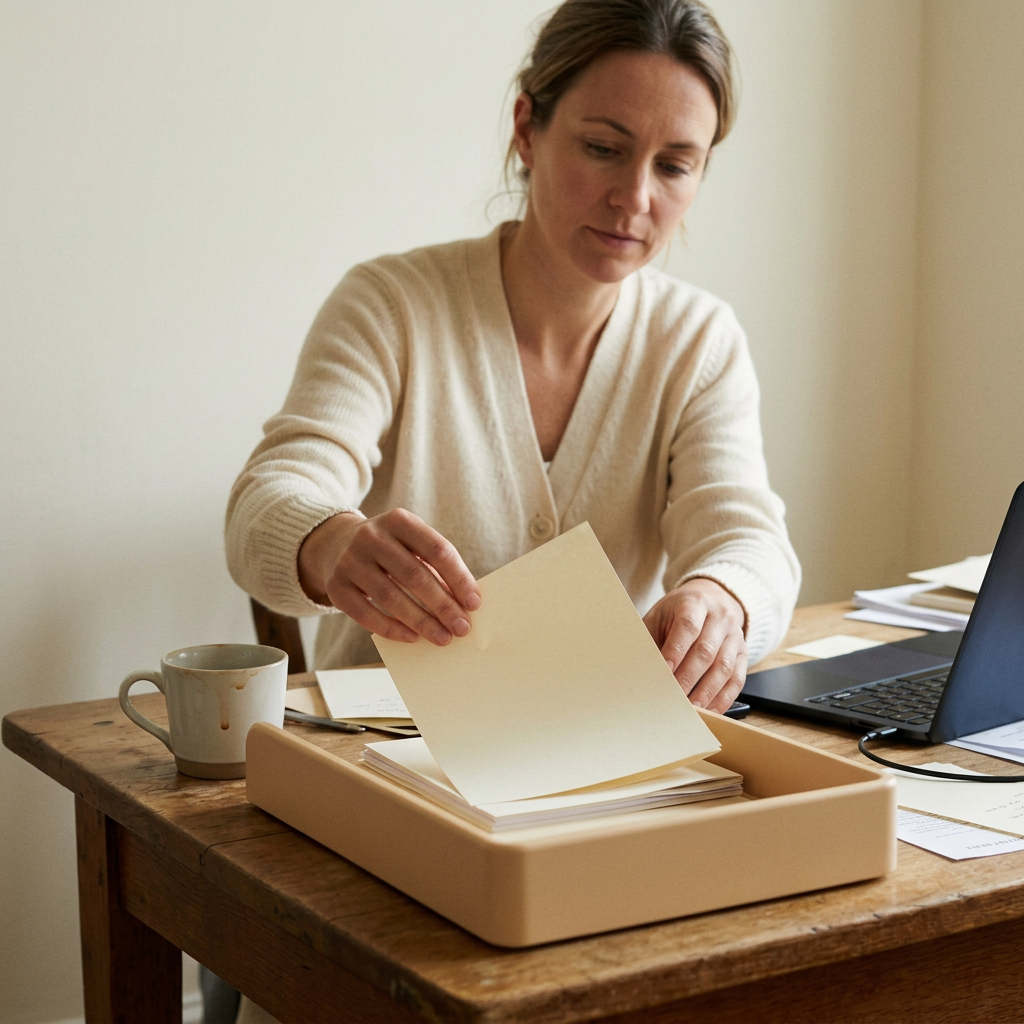
Some papers are still in motion. You have read them, but not finished with them. They belong to the conversation after lunch, the draft you want to revisit, or the small household task that needs one more decision. This apricot desktop document tray gives those working pages a visible place without asking you to pretend the work is already complete.
The design is one open level, not a stack of drawers or a multilevel organizer. A flat rectangular interior meets low walls along the two sides and back. The front remains open, with no front wall across the entry. Rounded corners and a soft apricot appearance keep the outline understated beside ordinary desk materials.

Think of it as a place between decisions
A tray does not have to become a permanent home for everything you have not sorted. Give it a narrower purpose. It might hold the papers you want to read this afternoon or the working copies for one current project. The useful part is knowing why a page belongs there and what should happen to it next.
That approach leaves room for an unfinished task without allowing it to take over the whole table. A printout can wait while you answer a message. A reference sheet can stay nearby while you write. The work remains yours to decide, but it has a place within the arrangement rather than wherever a spare patch of desk happened to appear.
Three ways to give the tray a clear role
The reading place
Choose a few suitable pages you intend to review during a defined session. Put them in an order that makes sense, then remove them as each is finished. Avoid adding unrelated material simply because the tray is nearby. A small, purposeful group is easier to understand than a collection assembled without a reason.
For a study session, this could mean the notes associated with one topic. For personal reading, it might be a draft and its supporting reference. Match the actual paper size to the tray's verified interior dimensions before choosing it for a specific format.
The current draft place
Work often leaves more than one version behind. Before setting a page in the tray, decide whether it is the version you are using or something that belongs elsewhere. A simple habit of checking the date or content can matter more than a complicated filing system.
Keep reference pages in a useful sequence and return them after consulting them. If a project changes direction, review the contents rather than placing the next draft over everything that came before. The tray can support the task without becoming its entire history.
The review place
Set aside a small group of everyday papers you want to consider at home. Read them, identify any next action, and move them to an appropriate destination afterward. The tray is a temporary working space, not secure storage for sensitive information or a substitute for specialist preservation.
Leave important originals in storage suited to their requirements. Choose working copies when appropriate, and avoid putting irreplaceable documents where drinks, direct sunlight, or casual handling could affect them.
A closer look at the open design
The front opening is the defining feature. Rather than enclosing the papers on every side, the tray leaves one short edge unobstructed. The low side walls run toward the back, where the rear wall completes the three-sided outline. Inside, the surface stays visually simple, without dividers or separate sections.
The soft apricot tone introduces a warm color to the desktop. Its matte appearance sits comfortably beside cream paper and pale wood, while the rounded corners soften the rectangular silhouette. No large logo or decorative slogan interrupts the exterior.

The table can still look lived in 🪴
A notebook may stay open beside the keyboard. A pencil might rest across a practice sheet, and a cable may still need moving out of the way. The tray does not require the surrounding room to become a showroom. Give it enough suitable space to sit fully supported, then let the rest of the arrangement reflect the way you work.
At a shared table, consider what needs to happen when the session ends. Review the papers before moving them, and handle the tray according to its actual instructions and load limits. Do not assume that an open-front design will retain loose contents during movement or on a tilted surface.
Start with fit, not an assumed paper standard
Confirm the actual interior dimensions before choosing this item for a particular paper format. The photographs do not establish A4, Letter, or another standard fit. Leave suitable clearance around the papers rather than bending edges to make an oversized sheet sit inside.
No sheet capacity, load rating, nonslip performance, or stackable construction is claimed. This is presented as one standalone level. Do not stack additional trays or heavy objects on it unless the actual product instructions specifically support that use.
Place it on a level surface away from the desk edge, and avoid letting loose papers extend into walkways, moving cables, or other work areas. Keep drinks and damp objects elsewhere. A considered location is part of making the open design useful.
A short closing ritual
Before you leave the workspace, lift out the papers that no longer belong. Return completed material to an appropriate destination and decide what should remain for the next session. You do not need to clear the tray every time, but it helps to understand the collection you are leaving behind.
Follow the care guidance supplied with the actual item. Remove papers before cleaning, allow any permitted cleaning moisture to dry, and avoid assuming that the surface tolerates soaking or particular chemicals. The tray is intended for suitable desk use, not serving food or holding liquids.
One tray, ready for your own working papers
- One pale apricot desktop document tray.
- A single open level with a flat rectangular interior.
- Low side and rear walls with rounded corners.
- An open front without a front wall.
Paper, notebooks, pens, mugs, computers, furniture, and other lifestyle props are not included. Bring the materials that belong to your current task, keep the purpose clear, and let the next decision determine where each page goes.